
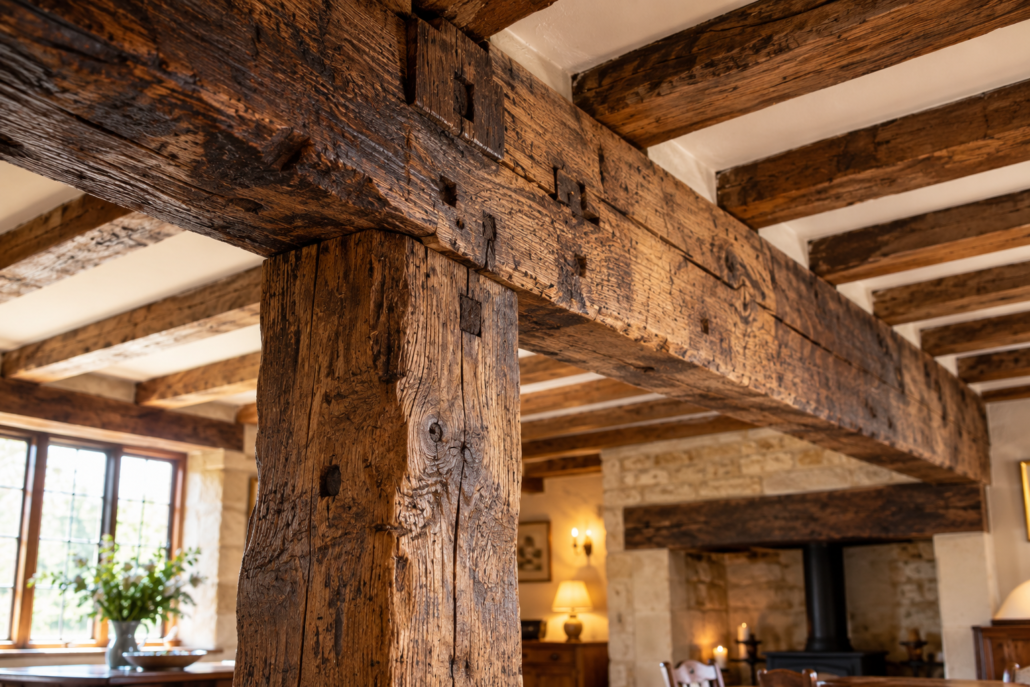
The Hidden History Beneath Old Wooden Beams
Walk into a centuries-old English cottage, converted barn or traditional public house and one of the first things you may notice is the exposed timber. Dark oak beams, heavy wooden supports and intricate roof structures are among the most recognisable features of Britain’s historic buildings. However, the appearance of these timbers can be surprisingly misleading. What looks like naturally dark wood may actually be covered in centuries of soot, smoke, paint, wax and accumulated dirt. Careful cleaning can sometimes reveal a very different appearance beneath the surface, offering a fascinating glimpse into the history of the building.
Why Are So Many Old Wooden Beams Black?
Many people assume that historic oak beams have always been almost black. Although oak naturally darkens with age, there are several other reasons why exposed timbers become discoloured. Before modern central heating, open fires were the principal source of warmth in many homes. Smoke circulated through rooms and roof spaces, gradually depositing soot on exposed wooden surfaces. In medieval buildings, particularly those constructed before widespread chimney use, smoke could accumulate directly beneath the roof. Over generations, this contamination became embedded in the surface of the timber.
Later occupants sometimes applied dark stains, oils, varnishes or paint to create a fashionable appearance or disguise inconsistencies in the wood. Consequently, a beam that appears almost black today may originally have been considerably lighter. Historic wooden beams are also more than structural components, as they can provide valuable clues about traditional construction methods and the development of a property.
Marks left by axes, adzes and hand-operated saws can reveal how timber was prepared before mechanised woodworking became commonplace. Carpenters also used assembly marks to identify where individual timbers belonged during construction. In some buildings, evidence of previous joints, wooden pegs and unused mortises suggests that timbers have been moved or reused from earlier structures. These details are particularly important when examining medieval and Tudor buildings, as aggressive cleaning or sanding can permanently erase such evidence.
Why Was Oak Used in Historic Buildings?
Oak was widely used in traditional English construction because of its strength, durability and availability. Its dense structure and natural resistance to decay made it suitable for supporting heavy roofs, floors and timber-framed walls. Many historic oak structures have survived for several centuries, although their condition depends on moisture exposure, ventilation, previous alterations and maintenance.
Oak also contains tannins, naturally occurring compounds that can react with moisture and certain metals, contributing to staining and changes in colour. These characteristics help explain why cleaning old oak requires a different approach from cleaning modern softwood.
Cleaning and Preserving Historic Timber
Sanding is sometimes used to remove coatings and discolouration, but it can also remove original timber material. On historic beams, even a small amount of unnecessary abrasion may destroy tool marks or alter the character of the surface. Specialist timber cleaning methods can include carefully controlled dry techniques, appropriate cleaning products and other conservation-led treatments. The suitability of any method depends on the condition of the timber, the type of contamination and whether historic coatings should be retained.
Steam and moisture-based techniques require particular caution because introducing water into old timber can create problems if it is not properly controlled. For significant historic buildings, advice from a suitably qualified conservation professional may be necessary before work begins. This is especially important in listed buildings, where certain alterations and treatments may require listed building consent.
Across Cambridgeshire and the surrounding counties, traditional cottages, farmhouses, barns and historic commercial properties contain remarkable examples of timber construction. Understanding how these buildings have aged can help owners make better decisions about their maintenance. Specialist cleaning companies such as Edge Steam Cleaning recognise the importance of assessing older materials before undertaking restoration work.
Sometimes the most interesting part of a historic building has been hiding beneath layers of dirt and decoration for generations. Revealing it successfully requires patience, appropriate techniques and respect for the craftsmanship of the past.

 ReviewVault
 Facebook
 Trade
Trade

Leave a Reply
Want to join the discussion?Feel free to contribute!