
Why Do Driveways Turn Green and Slippery During Winter?
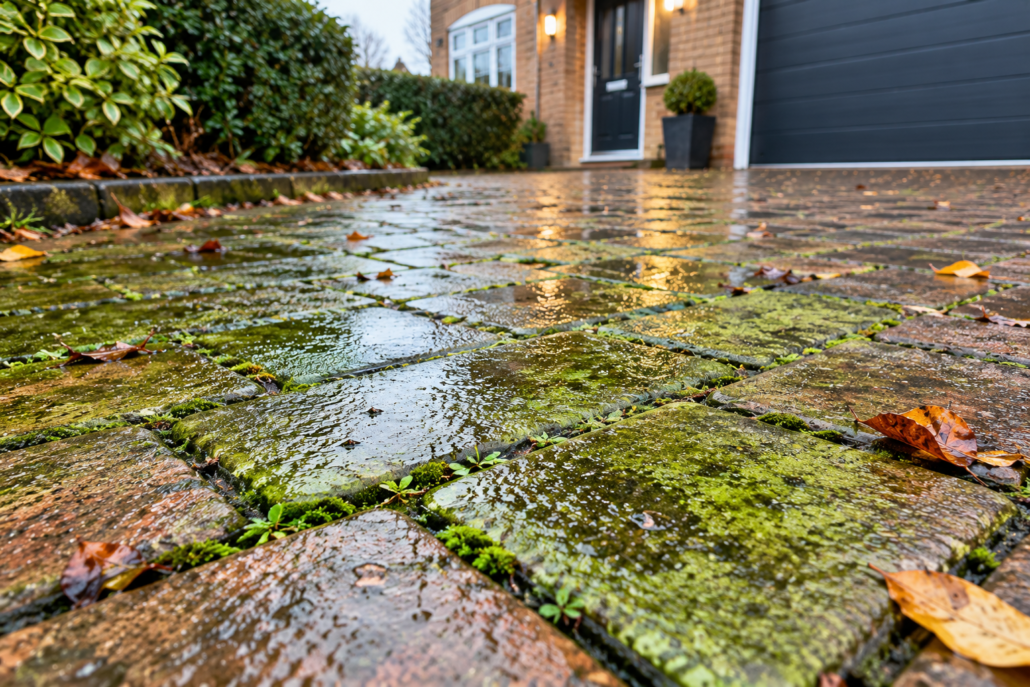
Every autumn and winter, thousands of homeowners notice the same frustrating change to their driveways, patios and garden paths. Surfaces that looked relatively clean during the summer gradually develop green patches, dark staining and slippery areas. The transformation can happen surprisingly quickly, particularly during prolonged periods of damp weather. Although this discolouration is often described simply as moss, several different organisms can be responsible. Understanding why they develop helps explain how exterior surfaces can be maintained more effectively.
What Causes Green Growth on Driveways?
The green film commonly found on block paving, concrete and natural stone is frequently caused by algae. Algae are simple photosynthetic organisms that thrive where moisture and suitable light conditions are available. Unlike many garden plants, algae do not require deep soil or extensive root systems. They can colonise damp surfaces, particularly where water remains for extended periods.
Moss is another common problem, tending to establish itself in joints, cracks and areas where dirt and organic matter have accumulated. Lichens may also appear on paving. These are composite organisms formed through a partnership between fungi and photosynthetic algae or cyanobacteria. They can produce stubborn circular patches in colours ranging from pale grey to yellow, green and black.
Why Is Winter Particularly Bad for Paving?
Britain’s winter climate provides favourable conditions for biological growth on exterior surfaces. Shorter days, lower temperatures and frequent rainfall mean that driveways often remain damp for longer. During summer, sunlight and warmer conditions can help exposed paving dry relatively quickly. In winter, shaded areas may stay wet for much of the day, encouraging algae and moss to establish themselves.
Fallen leaves can make matters worse by trapping water and depositing organic material onto the paving. Properties surrounded by trees, high fences or neighbouring buildings may experience more severe problems because reduced airflow and sunlight slow the drying process.
Algae can form a thin biological film across the surface of paving materials. When wet, this film may reduce friction between footwear and the ground, increasing the risk of slipping. The problem can be particularly noticeable on smooth concrete, natural stone and heavily contaminated block paving. Moss can also create uneven or slippery patches, especially where thick growth develops between paving joints. For homeowners, this is more than a cosmetic concern, particularly on steps, paths leading to front doors and frequently used walkways.
Does Block Paving Make the Problem Worse?
Block paving is popular because of its attractive appearance and practical construction, but the joints between individual blocks can provide favourable conditions for moss and weed growth. Over time, windblown dirt, decaying leaves and other debris accumulate between the blocks. If jointing sand is lost or contaminated, these gaps can become suitable places for unwanted vegetation to establish itself. Poor drainage can make the situation worse by allowing water to remain on the surface.
However, algae and moss are not limited to block paving. Concrete, tarmac, paving slabs and natural stone can all develop biological contamination. Pressure washing is commonly used to remove these deposits, but excessive pressure or inappropriate equipment can create problems. On block paving, powerful water jets may remove jointing sand, leaving gaps that need to be replenished. Some natural stone surfaces can also be damaged by aggressive cleaning, particularly where the material is soft or already deteriorating.
Keeping Driveways Cleaner Throughout the Year
Regular maintenance can help reduce the conditions that encourage algae and moss. Removing fallen leaves, sweeping away accumulated debris and keeping drainage channels clear are useful starting points. Where practical, improving sunlight exposure and airflow may also help surfaces dry more quickly.
Professional cleaning can remove established contamination, but biological growth may eventually return if the underlying damp conditions remain. For exterior cleaning specialists such as Edge Steam Cleaning, understanding the causes of algae and moss is an important part of achieving effective, lasting maintenance.
Ultimately, the familiar green appearance of winter paving is a consequence of moisture, biology and the British climate. Keeping surfaces clean is not simply about appearance; it can also help maintain safer access around the home.

 ReviewVault

 Facebook
 Trade


Leave a Reply
Want to join the discussion?Feel free to contribute!